The Reward Has to Reach the Dog: Timing a Training Cue
Timing a training cue helps your dog connect the right action with its reward. Learn when to mark, what to do if you’re late, and how to choose a pace.
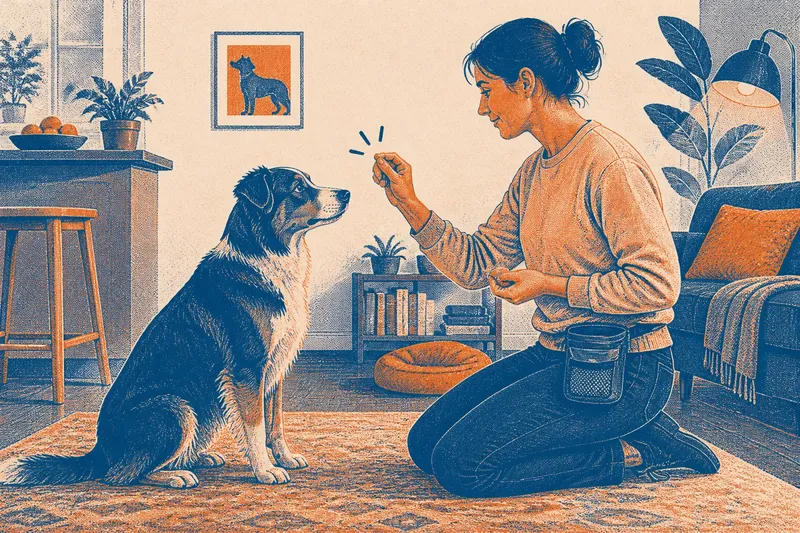
Timing a training cue can change what your dog thinks earned a treat. If you ask for “sit,” your dog lowers its rear, and you reward just as its bottom touches the floor, the connection is clear. If you wait until it stands again, the treat may reward standing instead. A small pause can make a big difference in what the dog tries next.
The useful question is not how fast you can move your hand. It is what exact moment you want the dog to notice. You can mark that moment with a word such as “yes,” then deliver the food, or simply give the reward promptly. Both approaches can work; choose the one that helps you stay clear and consistent.
Mark, then reward
A marker is a brief sound that identifies the behavior you want. Many people use “yes” or a clicker. The marker bridges the short gap between the behavior and the treat: the sound says, in effect, “That moment is the one.” The food can follow as you reach for it.
For instance, imagine your dog looks at you after hearing its name. You say “yes” while the dog is looking, then offer a small treat. If you instead mark after the dog turns away, that later action may be what the dog associates with the sound and reward.
A marker is especially handy if the treat is in a pocket, pouch, or across the room. It can also help when a behavior happens quickly, such as a brief glance toward you. It is less helpful if the marker comes late or is used for several different things at once. Keep it tied to the moment you mean to reinforce.
Practice the marker separately before using it for a new cue. Say “yes,” then give a treat; repeat in a calm setting until the sound reliably predicts food. If you use a clicker, click once and follow with a reward. The marker does not replace the reward: it tells the dog which action earned it.
Reward without a marker
You can also deliver a treat directly at the behavior you want, without a separate word or click. This suits quiet practice at home, simple actions that last long enough for you to reach the dog, or handlers who find a marker distracting. For a hand target, for example, offer your palm, wait for a nose touch, and place the treat right beside the hand.
Direct delivery can be less precise when the action is brief or the treat is slow to reach the dog. A dog that lies down and then pops up may receive food only after it stands. If that happens, the reward’s location and timing can make the standing part more noticeable than the brief down.
Where you place the food matters, too. To encourage a dog to remain in a sit, deliver the treat near its nose while it is still sitting. If you toss the treat away, the dog will likely get up to retrieve it; that can be useful when you want to reset for another repetition, but it is not the best choice if you are rewarding a longer, steady sit.
Choose direct delivery when you can reach the dog at the right instant. Use a marker when the behavior is fleeting or the food cannot arrive promptly.
One cue at a time
Keep practice focused on one cue and one visible action. If you are teaching “down,” decide what counts: perhaps elbows and chest resting on the floor. Say the cue once, wait, and mark or reward that action. Avoid adding “down,” “lie down,” and a hand signal together while the dog is still learning what the first cue predicts.
Use a quiet space with treats ready in a pouch or on a nearby surface. Work in short, easy turns, and pause if your dog wanders off, sniffs around, or seems unsure. Those signs suggest the setup may be too distracting or the request too difficult for that moment. Make the next attempt simpler rather than repeating the cue more loudly.
Say you are practicing “touch” in the kitchen. You present an open palm, your dog taps it with its nose, and you mark that contact before giving a treat. If the dog starts pawing at your hand, pause, lower your hand, and wait for the nose touch again; then reward the action you chose. The clear target makes it easier for both of you to tell what earned the food.
Which approach fits?
There is no need to use a marker for every behavior. Pick based on the speed of the action, how easily you can deliver food, and what keeps your handling calm.
- Use a marker and then a treat for quick actions, such as a glance, a nose touch, or turning toward you. It suits a handler who can make a distinct sound at the right instant and deliver food afterward.
- Deliver the treat directly for slower actions, such as holding a relaxed sit while you are beside the dog. It suits someone who wants fewer tools and can place the food without delaying the reward.
- Pause and simplify if you keep missing the moment or your dog looks confused. Make the action easier to see, reduce distractions, or practice a simpler version before asking for more.
If you are unsure, try the same easy behavior with each approach in separate turns. Notice which one lets you reward the intended moment cleanly and leaves your dog ready to try again.
When should I mark the behavior?
Mark as the dog performs the action you want, not after a chain of extra movements. For a sit, that may be the moment the rear reaches the floor; for a sustained stay, reward while the dog is still in position.
How late is too late?
There is no single cutoff that applies to every behavior, but a longer delay makes the intended connection less clear. If the moment has passed, avoid pretending the reward was timely; reset calmly and look for an easier chance to mark the right action.
Can I say “yes” instead of using a clicker?
Yes. A short spoken marker can serve the same basic purpose if you use it consistently and follow it with a reward. Pick a word that stands out from ordinary conversation.
What if my dog does something else before the treat arrives?
If you marked the intended action at the right moment, calmly deliver the treat without adding another cue. Next time, have the food closer or choose an action that is easier to reward promptly.
Build a clean repetition
Before each try, decide what you will reward and where the treat will come from. Say the cue once, watch the dog rather than the treat pouch, and mark or deliver food at the chosen moment. Then give your dog a brief chance to reset before repeating.
If your timing slips, there is no need to scold or rush. Simply arrange the next repetition so the action is easier to see: practice in a quieter room, use a simpler movement, or bring the reward within reach. For help with persistent confusion, fear, or training that involves safety concerns, consult a qualified, reward-based trainer or your veterinarian.
Good timing is less about speed than about choosing a clear moment and making the reward follow it. When you practice one cue at a time, your dog gets a simpler message: this is the action that made the good thing happen.