Brush, Comb or Both? Matching a Tool to Your Dog’s Coat
Choose a brush, comb, or both for your dog’s coat texture and grooming task, with gentle starting points that help prevent snagging and discomfort.
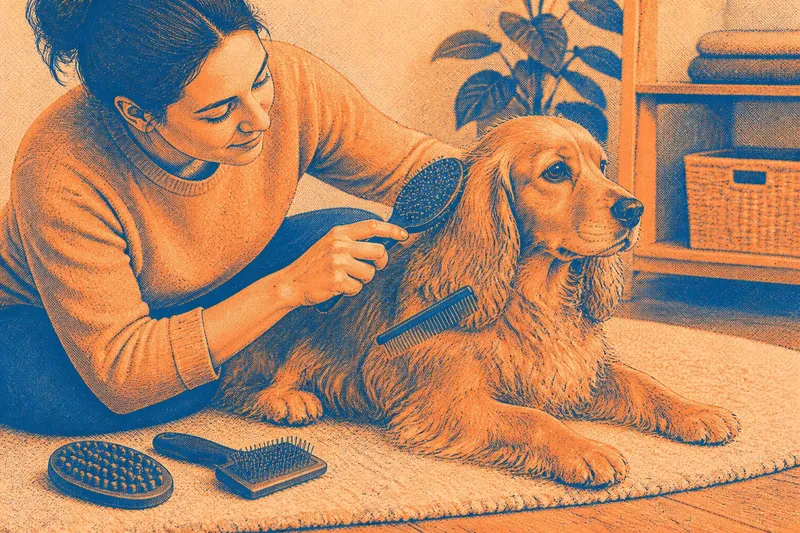
A brush, comb, or both may suit your dog, depending on the coat you are working through and the job in front of you. For choosing dog grooming tools, start with what the hair feels like—not with a promise that one brush can handle every coat. A soft, short coat needs a different touch from a long coat that tangles behind the ears.
Use the tool that moves through the coat without scraping skin, pulling hair, or making your dog lean away. If a knot resists gentle handling, stop rather than tug harder; a groomer or veterinarian can advise on painful, matted, or skin-related concerns.
Start with texture
Look at the coat where it is longest and most likely to tangle. Feel a few hairs between your fingers, then notice whether the coat lies close to the body, forms loose curls, or has a dense layer underneath. Those clues help narrow your choices.
- Short and smooth: Hair lies close to the skin, with little length to knot. A rubber curry brush or grooming mitt is often a gentle starting point for lifting loose hair and spreading natural oils.
- Short and dense: The coat may look smooth but feel thick. A soft-to-medium bristle brush or rubber tool can loosen surface hair; a slicker brush is usually unnecessary unless the dog has longer feathering or a specific tangle.
- Long and silky: Hair can catch around the ears, legs, tail, and collar. A pin brush can loosen and separate longer strands, while a metal comb helps check whether the hair is clear close to the skin.
- Curly or wavy: Curls can hide tangles beneath the surface. A suitable slicker brush can open small sections gently, with a comb used afterward to check the roots and areas prone to mats.
- Double coat: A soft outer coat may cover a thick undercoat. A pin brush or a coat-specific undercoat tool may help, but choose one designed for your dog’s coat and use light pressure rather than scraping repeatedly.
- Wiry or rough: The coat may feel coarse and hold its shape. A firm bristle brush can remove loose surface debris, while trimming or hand-stripping decisions are best discussed with a groomer familiar with the coat.
Coat labels are useful starting points, not exact instructions: mixed coats and individual dogs vary. If you are unsure, a groomer can show you a suitable tool and a gentle way to use it.
Match tool to task
A bristle brush works mainly on the coat’s surface. Soft bristles suit many smooth-coated dogs and can help remove dust; firmer bristles may suit a thicker or rougher topcoat. Choose a brush that bends or gives slightly under light pressure, rather than one that feels scratchy against your palm.
A rubber curry brush or grooming mitt is a comfortable option for many short-coated dogs. Its flexible nubs lift loose hair as you move with the coat. It is also easy to grip when your dog is more relaxed with a hand-like motion than with a brush. Avoid pressing hard over ribs, joints, or any sore area.
A pin brush has spaced pins, sometimes with rounded tips, and is useful for longer hair that needs separating without a dense field of bristles. It may glide through feathering on the legs or tail, but it is not a substitute for checking the roots of a thick coat.
A slicker brush uses fine, bent wires to tease through loose hair and small tangles. It can suit curly, wavy, or longer coats, but its surface can irritate skin if you press down or brush the same patch repeatedly. Work in small sections and pause if your dog flinches, turns away, or tries to leave.
A metal comb is especially useful as a checker. Its teeth can reveal a snag that a brush has passed over, particularly behind the ears, beneath the collar, in the armpits, and around the hindquarters. A comb can also help separate long hair, but pulling it through a tight knot can hurt.
An undercoat rake or deshedding tool is intended for certain dense or double coats, not as a universal shedding fix. Some designs cut or scrape hair if used forcefully or too often. Check that the tool is suitable for your dog, and ask a professional if you are uncertain about the coat or technique.
Choose by situation
Which tool fits a smooth coat?
For a short, smooth coat, begin with a rubber mitt or soft bristle brush. The goal is to lift loose surface hair and keep grooming comfortable, not to reach the skin with a sharp or forceful tool.
What helps with long, straight hair?
Try a pin brush to loosen the lengths, then use a metal comb to check common snagging spots. If the comb catches, ease the hair apart with your fingers or stop and seek help rather than pulling through.
How should I approach curls or a double coat?
For curls, use a suitable slicker in small, gentle sections and check the roots with a comb. For a double coat, choose a coat-specific tool and use restraint; a tool meant to remove undercoat can irritate skin or break coat when misapplied.
What if my dog dislikes brushing?
Choose the softest tool that still suits the coat, keep the session brief, and stop before your dog becomes distressed. If handling causes pain signals, sudden sensitivity, or a strong reaction, consult a veterinarian or qualified groomer rather than trying a harsher tool.
When both tools fit
A brush and comb can do different jobs on the same coat. The brush loosens and separates hair; the comb checks whether tangles remain. This pairing is especially useful for long, curly, or densely coated dogs, where the surface can look smooth while a knot hides underneath.
Say you have a dog with long hair behind the ears and feathering on the legs. Start with a pin brush on a small section, moving gently through the lengths. Then pass a metal comb through the same area; if it glides without catching, move on. If it snags, pause and work only at the loose edge with your fingers. The expected sign of a suitable routine is hair that separates without your dog pulling away, not a perfectly polished finish.
For a short-haired dog, using both tools may add little. A rubber mitt may be enough for surface grooming, while a comb is useful only if the dog has a longer patch or a specific snag. More tools do not automatically make grooming better.
Keep grooming comfortable
Brush in the direction the coat lies, using light strokes and short sections. Rest the other hand near the area you are grooming so you can feel skin movement and keep hair from pulling. If your dog shifts, stiffens, licks their lips, or repeatedly turns toward the tool, pause and give them room.
Check the tool before each session. Bent pins, sharp edges, cracked handles, or loose parts can scratch skin or make the brush harder to control. Clean out trapped hair so the tool can move freely, and keep grooming tools separate from items used for household cleaning.
Do not use scissors to cut out a mat close to the skin. A dog’s skin can be drawn into a tight knot, making it difficult to see where the coat ends and skin begins. Severe mats, irritated skin, or a sudden change in coat condition call for professional advice.
The right dog grooming tools depend on coat texture, the area you are grooming, and how your dog responds. Start with the gentlest suitable option, add a comb when you need to check beneath longer hair, and stop if the coat resists or your dog seems uncomfortable. A tool that feels calm and controlled in your hand is a better starting point than one that promises to remove more hair.