A Rainy Walk, at Sniffing Pace
A rainy walk at sniffing pace makes a damp outing calmer: choose a comfortable route, leave room for pauses, and return home with an easy routine.
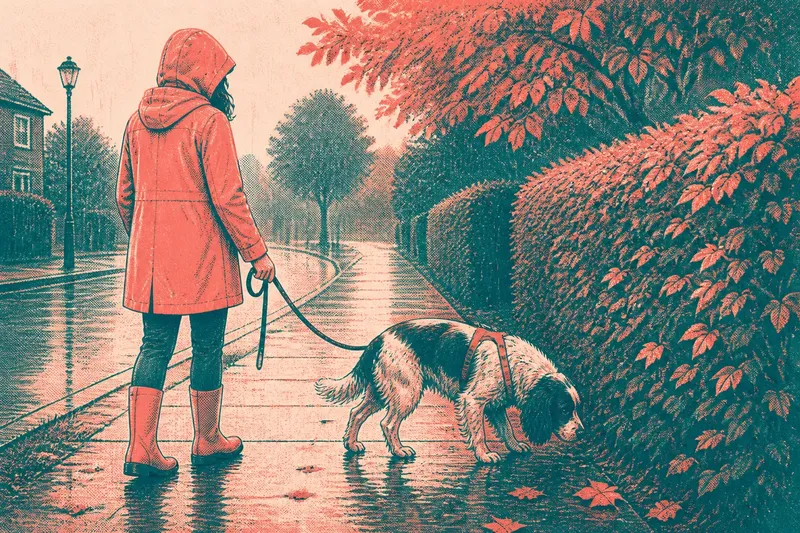
A rainy walk at sniffing pace works best when the route stays comfortable and the dog can stop to investigate without being hurried along. You do not need to cover a particular distance; a familiar loop with dry footing and a few interesting smells may suit a damp day better than a longer outing.
Choose a kinder route
Rain changes the feel of an ordinary walk. Puddles spread across paths, leaves turn slick, and traffic noise can seem sharper beneath umbrellas and wet tires. Pick a route that gives you room to adjust rather than one that depends on reaching a distant destination.
A quiet residential block, a sheltered park path, or a short loop near home can work well. Look for even ground, places where you can step aside, and an easy way back if your dog seems uncomfortable. Avoid letting a familiar route dictate the plan if runoff, muddy slopes, or busy crossings make it awkward that day.
Let your dog’s body language help set the pace. A dog who walks loosely, checks the surroundings, and chooses to sniff may be settling into the weather. A dog who tucks their tail, repeatedly turns toward home, or resists moving forward may need a shorter outing or a sheltered pause. Do not pull a reluctant dog through a stretch simply to complete the loop.
Choose the route you can shorten without fuss.
Leave room for sniffing
Sniffing gives a walk its own kind of activity. A damp hedge, a tree base, or a patch of grass can hold plenty of scent information, and your dog may want time to sort through it. Let the leash stay loose where the surroundings allow, while keeping enough control to guide your dog away from hazards.
Use pauses as invitations, not assignments. At a safe verge, stand still and give your dog a little leash slack. If they sniff, wait; if they move on, follow. You can also use a simple cue such as “let’s go” when it is time to leave, then offer another pause farther along. This keeps the walk from becoming a tug between stopping and moving.
Rain can carry scents along the ground, but it can also make some surfaces unpleasant or risky. Keep your dog away from standing water of uncertain quality, scattered food, and slick edges. If a sniffing spot is crowded or close to traffic, move on calmly rather than stretching the pause.
When should you cut the walk short?
What if my dog refuses to leave the doorway?
Do not drag or coax them into a downpour. Try a brief sheltered step outside and let them decide whether to continue; if they remain uneasy, offer an indoor activity and try again when conditions feel more manageable.
How can I tell if my dog is getting cold?
Shivering, persistent paw lifting, a hunched posture, or an effort to head home can signal discomfort. End the outing and warm your dog gradually indoors; ask a veterinarian about recurring sensitivity or unusual symptoms.
Should I use a raincoat?
A coat may help a dog who tolerates one and seems uncomfortable getting wet, while another dog may move more freely without it. Choose a comfortable fit and follow the maker’s care and use directions.
What if the route is muddy or slick?
Choose firmer, flatter ground or turn back rather than asking your dog to negotiate a slippery slope. A shorter walk on a safe sidewalk is a sensible outing, not a failed one.
Make the return gentle
The walk’s final minutes shape the transition indoors. Near home, slow down rather than rushing straight from an exciting scent to the door. Give your dog a moment to settle, then use a towel by the entrance to blot paws, legs, and belly. Keep the towel within reach so the routine stays simple.
Check between the toes for grit or plant debris, and wipe the coat where rain has collected. If your dog dislikes paw handling, pause between paws and keep your touch brief; forcing a long cleanup can make the doorway feel like a trap. A washable mat can catch drips while your dog stands or rests.
Imagine your dog starts toward a favorite park path, then slows when rainwater runs across the slope. You turn onto the flatter street, let them sniff a hedge, and head home when they begin looking back. At the door, a quiet towel-off and a dry resting place complete the outing without turning it into a test of endurance.
Keep the routine flexible
There is no single rainy-walk length that suits every dog. Age, coat, comfort with weather, footing, and the day’s energy all matter. Some dogs enjoy a steady stroll in light rain; others do better with a short loop and indoor play afterward. If a dog has a health condition or shows a marked change in tolerance, a veterinarian can help you tailor the plan.
For your next rainy walk, keep the goal modest: a comfortable route, a few unhurried sniffing pauses, and an easy return home. The most useful measure is whether your dog can move, explore, and come inside feeling settled—not how far the leash traveled.